


 Save
Save Print
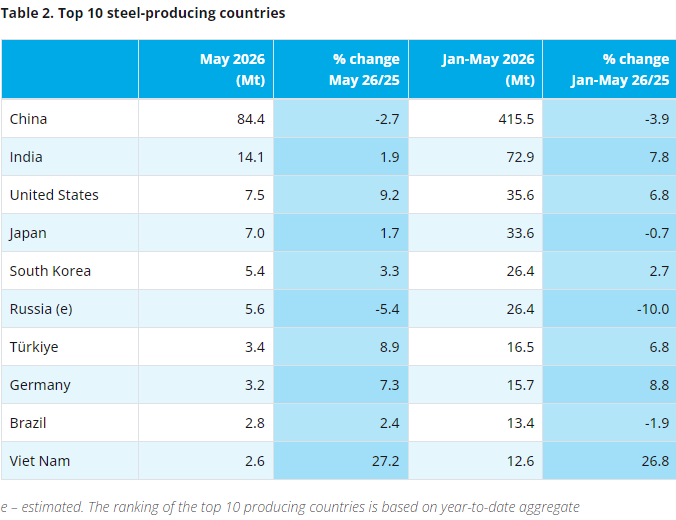
Print【Ferro-alloys.com】:India's steel sector faces mounting energy security risks as 90 percent of its metallurgical coal is imported and a further 64 percentof planned capacities are also coal-based, according to a report issued by the Institute for Energy Economics and FinanciaAnalysis (IEEFA) on Monday.
The report showed that diversification towards US coal supplies offers only limited relief in a globally interconnected and volatilemarket.
India's target of reaching 300 million mt per year of crude steel capacity by 2030 is set to drive a sharp increase in met coaldemand. Furthermore, 64 percent of new steel capacities will also use the coal-based BF route.
At an average requirement of 770 kg of met coal per mt of steel, the planned BF capacity alone could require an additional 140million mt of coal, nearly doubling current supply levels, the report said.
Despite policy efforts to boost domestic production, incuding "Mission Coking Coar, India's reserves remain largely unsuitable forsteelmaking due to high ash content, leaving the country reliant on imports for about 90 percent of its met coal needs, it added.
The United States has emerged as Indias second -largest supplier of met coal, with its share rising from about eight percent in2020-21 to roughly 15 percent in 2024-25.
However, the IEEFA sad that that shifting suppliers does not shield lIndia from global price volatility. Australia continues todominate seaborne met coal exports, accounting for nearly half of global supply and acting as the key price setter.
Logistical and structural factors continue to limit the compettiveness of US coal Shipments from the US take 40-45 days to reachndia, compared to 20-25 days from Australia, increasing freight costs and supply chain uncertainty. While US coal may be cheaperon a free-on-board basis, higher transportation costs often erode this advantage.
Freight economics are a key factor. The longer distance for US cargoes means higher freight costs, now exacerbated by the WestAsia crisis and the impact on shipping fuel, the report said
The lEEF Aargues that reducing dependence on imported coal is essential for long-term energy security, while it recommendsaccelerating scrap-based electric arc furnace steelmaking and scaling up green hydrogen-based production.
- [Editor:Alakay]
 Daily News
 Research
 Magazine
 Company Database
 Customized Database
 Conferences
 Advertisement
 Trade
Trade


.jpg)

 Online inquiry
 Contact

Tell Us What You Think